
You might be surprised how many business owners are unaware that they need a fire risk assessment. Often, it is only when an insurance company asks for one or the Fire and Rescue Service carries out an inspection that the requirement comes to light.
This business fire risk assessment guide explains the legal duties and the practical steps involved.
Under the Regulatory Reform (Fire Safety) Order 2005, a suitable and sufficient fire risk assessment is required for business premises within its scope. This applies to small businesses as well as larger organisations.
Do I Need a Fire Risk Assessment for My Business?
The requirement covers a wide range of workplaces and commercial premises, including:
Offices, shops and retail premises
Restaurants, pubs, hotels and guesthouses
Warehouses, factories and workshops
Schools, nurseries and healthcare premises
Shared workplaces and multi-occupied commercial buildings
There is no exemption simply because you have fewer than five employees. Even a business with one employee can have duties under the Fire Safety Order.
Who is Responsible for a Business Fire Risk Assessment?
The Responsible Person is generally the employer where the workplace is under their control. Building owners, landlords and others who control relevant parts of the premises can also have duties.
The Responsible Person must ensure the assessment is suitable and sufficient, implement necessary fire safety measures identified by the assessment and maintain appropriate fire precautions. Where different businesses share a building, those with duties must cooperate and coordinate their fire safety measures.
Appointing a professional fire risk assessor does not transfer these legal responsibilities.
What Does a Business Fire Risk Assessment Cover?
A fire risk assessment considers how a fire might start, how it could spread, who could be harmed and whether existing precautions are adequate. The process broadly follows five stages:
Identify fire hazards, including ignition sources and combustible materials.
Identify people at risk, including employees, visitors and anyone who may need assistance.
Evaluate the risks, remove or reduce hazards and assess the adequacy of escape routes, alarms, emergency lighting, fire doors and other precautions.
Record the full assessment, prepare an emergency plan, provide relevant information and training, and identify clear, proportionate actions.
Review the assessment regularly and following significant changes.
A good assessment should explain what needs doing, why it matters and how urgently it should be addressed. It should not be a lengthy list of unnecessary improvements.
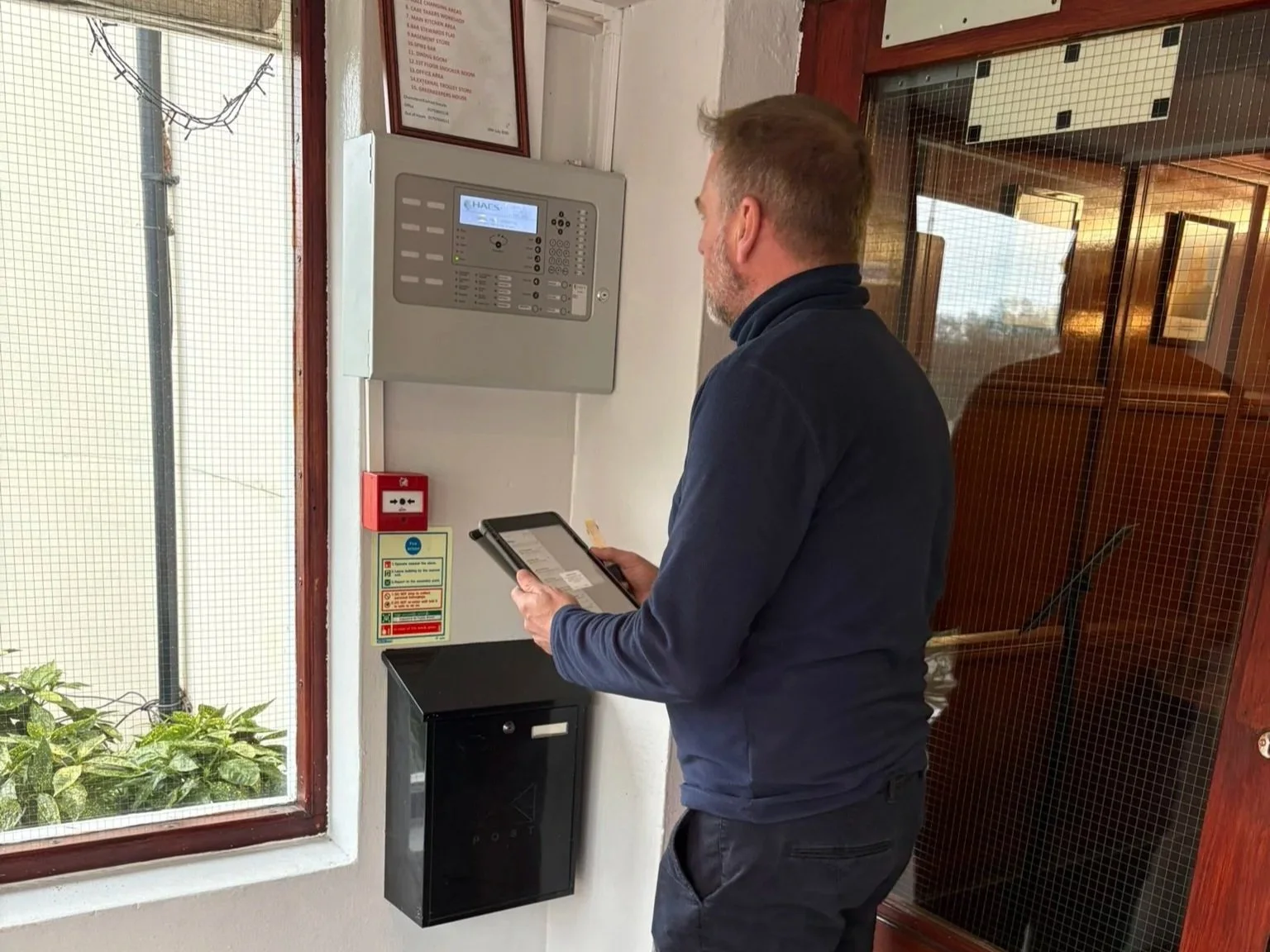
What Are the Legal Fire Risk Assessment Requirements for Businesses?
On 1 October 2023, changes introduced by Section 156 of the Building Safety Act 2022 strengthened the recording requirements under the Fire Safety Order. These fire risk assessment requirements for businesses apply regardless of company size.
Previously, recording the significant findings was generally required where there were five or more employees or certain other conditions applied. Responsible Persons must now record their fire risk assessment in full, regardless of employee numbers, together with specified fire safety information and the identity of anyone appointed to undertake or review the assessment.
The duty to carry out a suitable and sufficient assessment already existed. October 2023 changed the recording requirements; it did not create a new exemption or introduce the assessment duty for the first time.
Is a Fire Door Survey a Legal Requirement?
Fire doors are important for protecting escape routes and restricting the spread of fire and smoke. There is no universal statutory requirement for every business to commission a separate professional fire door survey at fixed intervals.
Article 17 of the Fire Safety Order requires relevant fire safety facilities, equipment and devices to be maintained in an efficient state, working order and good repair. However, fire doors must be suitable and adequately maintained. Where their condition or fire resistance performance is uncertain, a detailed inspection may be necessary to establish whether remedial works are required.
Common defects include ineffective self-closing devices, excessive gaps, damaged seals and unsuitable ironmongery. Any recommendations should reflect the condition and importance of the doorsets concerned.
(Find out more about our fire door surveys).
How Often Should a Business Fire Risk Assessment Be Reviewed?
A fire risk assessment should be reviewed at least annually as good practice, and sooner following significant changes to the premises, occupancy, activities, escape routes or fire safety measures. Article 9 of the Fire Safety Order requires regular reviews but does not prescribe a fixed annual interval. A review does not necessarily require a completely new fire risk assessment.
Can I Carry Out My Own Fire Risk Assessment?
A fire risk assessment is more than a checklist. It requires an understanding of fire hazards, means of escape, fire protection measures and the legislation relevant to the premises.
Engaging an experienced fire risk assessor provides an independent assessment of your building, helping to identify deficiencies that might otherwise be overlooked. Just as importantly, recommendations should be practical, proportionate and focused on genuine risks rather than unnecessary expenditure.
SLB Compliance provides professional fire risk assessments for businesses of all sizes, from small shops and offices to larger commercial and industrial premises, giving business owners confidence that their fire safety responsibilities are being properly addressed.

Why Choose SLB Compliance?
SLB Compliance provides independent fire risk assessments for commercial premises across Surrey, London and the South East. Our approach is practical and focused on life safety, clear findings and recommendations appropriate to the building and its use. Find out more about our commercial fire risk assessments.
We do not undertake fire protection contracting work, so our advice is based on the risks identified rather than the sale of remedial services.
A Word from Steve Bullen, SLB Compliance Director and Fire Safety Consultant:
“After many years working in fire safety, I still find it surprising how many business owners are unaware of their legal responsibility to have a fire risk assessment. Often, the requirement only comes to light when an insurance company requests one or the Fire and Rescue Service carries out an inspection. A fire risk assessment should identify genuine risks and lead to practical action that protects people.”
Need a fire risk assessment for your business? Contact the SLB Compliance team today for independent, professional advice.
Business Fire Risk Assessment FAQs
Do I need a fire risk assessment if I only have one employee?
Yes, if your workplace is covered by the Fire Safety Order. The number of employees does not remove the duty to assess fire risk.
Does a small shop or office need a fire risk assessment?
Yes. Small commercial premises are not automatically exempt.
Is a fire risk assessment required every 12 months?
Not automatically. It must be reviewed regularly and when significant changes or new risks arise.
Is a fire door survey the same as a fire risk assessment?
No. A fire risk assessment looks at the overall fire risks. A fire door survey examines the condition and suitability of fire doors in greater detail.
What happens if my business does not have a suitable assessment?
The enforcing authority can take action, including enforcement notices and, in serious cases, prosecution.
How much does a fire risk assessment cost for a business?
The cost depends on the size and complexity of the premises, its use, occupancy and the scope of the assessment. A small shop or office will generally take less time to assess than a large factory or multi-occupied commercial building.
Does a business need a new fire risk assessment when moving premises?
The fire risks at the new premises must be assessed before the workplace is brought into use. An assessment for the previous address cannot simply be transferred, although relevant existing information may assist.
What documents should a business keep alongside its fire risk assessment?
Relevant records may include fire alarm testing, emergency lighting maintenance, fire door checks, extinguisher servicing, staff training, evacuation drills and evidence of completed actions, as applicable to the premises.
Is a fire risk assessment the same as a fire safety certificate?
No. A fire risk assessment is an ongoing legal duty for premises within the scope of the Fire Safety Order. A certificate relating to an installation or building work does not replace that duty.
Is a fire door survey a legal requirement for my business?
There is no universal statutory requirement for every business to commission a separate professional fire door survey at fixed intervals. Fire doors must nevertheless be suitable and adequately maintained. Where their condition or fire resistance performance is uncertain, a detailed inspection may be necessary to establish whether remedial works are required.
Legislative References
Regulatory Reform (Fire Safety) Order 2005 — Articles 3, 5, 9, 17 and 22
Building Safety Act 2022 — Section 156 (changes effective 1 October 2023)
Home Office: Fire safety responsibilities under Section 156 of the Building Safety Act 2022