
When a main power supply fails, a familiar building can instantly turn into a dark, disorientating space. Emergency lighting is a vital life-safety measure that illuminates escape corridors, stairwells, and final exit doors during a blackout.
For commercial property owners, facilities managers, landlords, and block managing agents, ensuring emergency escape lighting is correctly installed and maintained is both a practical necessity and a strict statutory duty under the Regulatory Reform (Fire Safety) Order 2005 and updated BS 5266-1 standards.
As an independent consultancy, SLB Compliance provides clear, unbiased guidance to keep your properties safe and fully compliant.
1. The Legal Framework: Statutory Obligations Explained
Emergency lighting is a legal requirement across workplaces, commercial sites, and multi-occupied residential buildings in England and Wales.
Under Article 14 of the Regulatory Reform (Fire Safety) Order 2005, emergency routes and exits that require illumination must be provided with suitable emergency lighting whenever normal lighting fails. As the "Responsible Person" or duty holder, you must ensure escape routes are illuminated so occupants can see hazards, locate fire alarm call points, find firefighting equipment, and evacuate without delay.
Where is Emergency Lighting Required?
Emergency lighting is expected along communal escape routes across both residential and commercial sectors, including:
Purpose-Built Blocks of Flats & HMOs: Shared stairways, internal corridors, landings, entrance lobbies, and final exit doors.
Commercial Premises: Offices, retail outlets, restaurants, warehouses, factories, and care facilities.
Specialist Areas: Windowless rooms, plant rooms, lift cars, and large open-plan spaces.
A thorough Fire Risk Assessment will evaluate these areas alongside the building's fire door assemblies and structural compartmentation to ensure complete life-safety integration.
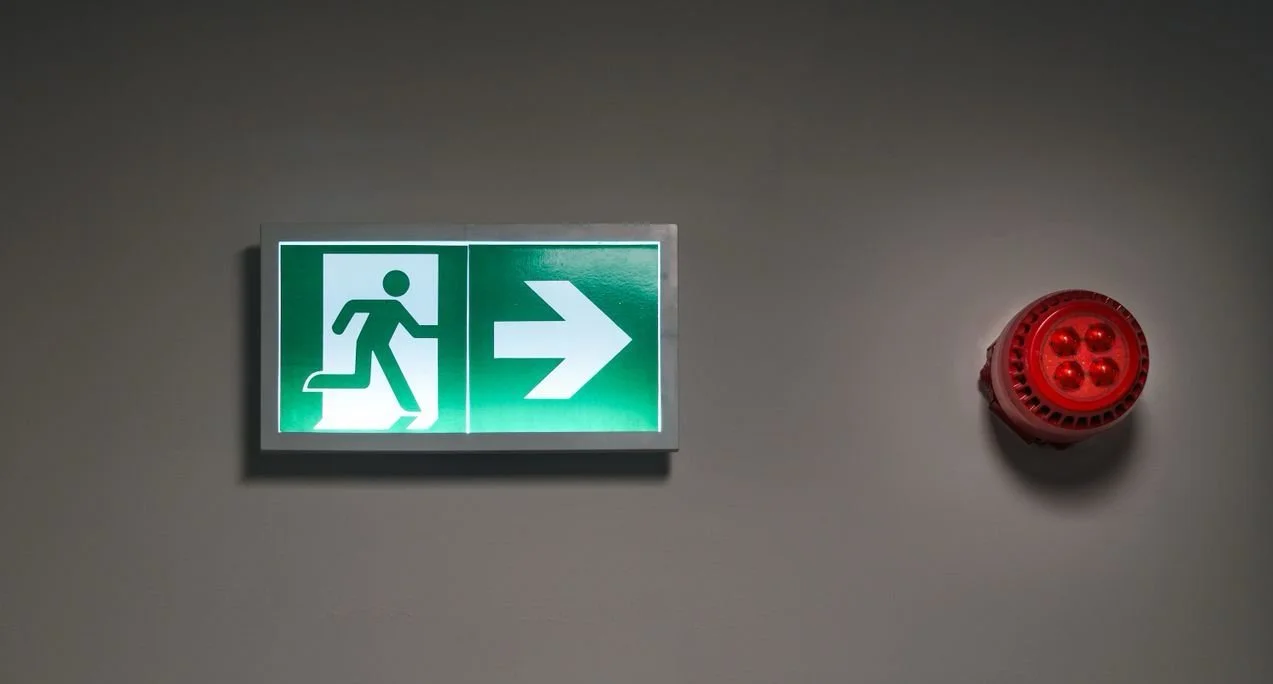
2. Important Changes to BS 5266-1:2025 (The Death of Borrowed Lighting)
The publication of the updated British Standard BS 5266-1:2025 (Emergency lighting — Code of practice for the emergency lighting of premises) introduces vital clarifications that directly impact how property managers manage communal illumination.
The Problem with "Borrowed Lighting"
In the past, many smaller residential blocks of flats and commercial units relied on "borrowed lighting", the idea that ambient light from nearby municipal streetlights shining through windows or glass doors was sufficient to illuminate internal escape stairs and hallways during a power cut.
The revised BS 5266-1:2025 standard no longer accepts borrowed lighting as a reliable substitute for dedicated emergency lighting.
Why Borrowed Lighting Is Unreliable:
Local Council Part-Night Lighting Policies: Local authorities across the UK increasingly dim or switch off public streetlights overnight to save energy and reduce carbon emissions.
Obstructions & Weather: Tree foliage, high-sided parked vehicles, scaffolding, window blinds, and heavy fog can easily block external light from reaching internal corridors.
Power Outages: If a localised power failure affects the entire street, both the building's internal lights and external streetlights will fail simultaneously.
If your property currently relies on borrowed lighting to illuminate communal escape routes, your fire safety provision is likely non-compliant and requires immediate review.
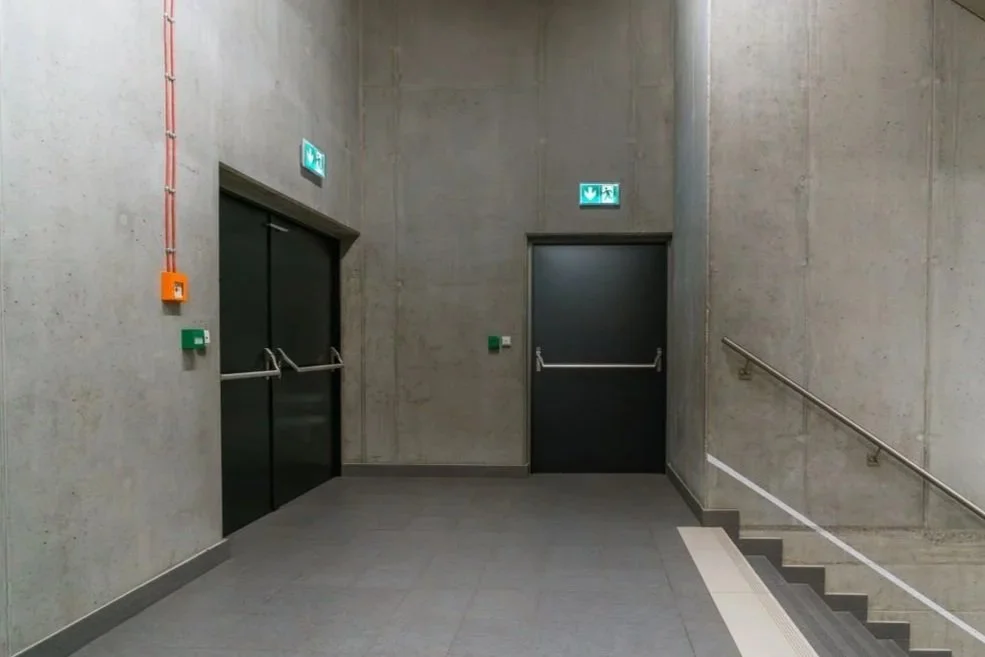
3. Types of Emergency Lighting Systems & Testing Requirements
To ensure emergency lighting performs during a crisis, building managers must understand basic system configurations and mandatory testing regimes:
System Types
Maintained Luminaires: These units operate continuously alongside normal lighting and remain illuminated during a power failure (common in cinema auditoriums, venues, and emergency exit signs).
Non-Maintained Luminaires: These units remain off during normal operations and only illuminate when the primary mains power supply cuts out (common in office corridors, stairwells, and residential blocks).
Statutory Testing Routine (BS 5266-8 / EN 50172)
Emergency lighting units rely on backup batteries that degrade over time. Regular testing is essential:
Monthly Functional Test: A brief simulated mains failure (via a test key switch) to confirm every luminaire lights up correctly and is clean and undamaged.
Annual Full-Duration Discharge Test: A full 3-hour battery discharge test conducted by a competent engineer to verify that all batteries maintain full light output for the entire statutory duration.
Logbook Records: All test dates, defects identified, and remedial actions taken must be formally recorded in your building's Fire Safety Logbook.
4. Steve's Professional View: The Independent Perspective
"As a Fire Risk Assessor at SLB Compliance Ltd, I welcome this clarification. Emergency lighting should be assessed as part of the building’s means of escape, with appropriate provision determined through a suitable and sufficient fire risk assessment."
— Steve Bullen (MIFSM, NFRAR Registered Assessor)
Ensure Your Premises Are Fully Compliant
Is your property portfolio still relying on outdated borrowed lighting, or are you unsure if your monthly testing regime meets statutory rules?
The team here at SLB Compliance provides independent, expert advice across London and the South East. If you need expert guidance on reviewing your emergency lighting provision, updating your Fire Risk Assessment, or auditing your Fire Doors and Compartmentation, get in touch with the independent consultancy team at SLB Compliance today.
Residential Emergency Lighting FAQs
1. Does every residential block of flats need emergency lighting?
While small, simple blocks with short, directly lit escape routes previously relied on external streetlights, current guidance and BS 5266-1:2025 mean almost all communal corridors, stairwells, and enclosed exit routes now require dedicated emergency lighting units to guarantee safe evacuation during a blackout.
2. How long must emergency lighting stay on during a power cut?
Under UK standards, emergency lighting systems in most residential blocks and commercial buildings must maintain illumination for a minimum duration of 3 hours following a mains power failure. This allows time for evacuation and gives emergency services clear visibility to operate.
3. What is the difference between emergency escape lighting and standby lighting?
Emergency escape lighting provides illumination for the safety of people evacuating a location. Standby lighting is designed to allow normal business activities to continue uninterrupted during a power outage (often powered by secondary generators).
4. How does the removal of "borrowed lighting" affect our existing Fire Risk Assessment?
If your current Fire Risk Assessment logged external streetlights as the primary illumination source for internal escape routes, your assessment is now out of date. You should request an updated review to identify where new self-contained emergency luminaires need to be installed.
5. Why should I use an independent fire safety consultant to review our emergency lighting?
Independent consultants do not sell electrical hardware or perform installation works. SLB Compliance evaluates your building with complete objectivity, ensuring you receive honest advice on exact luminaire placement without being upsold unnecessary equipment or overpriced contractor repairs.